
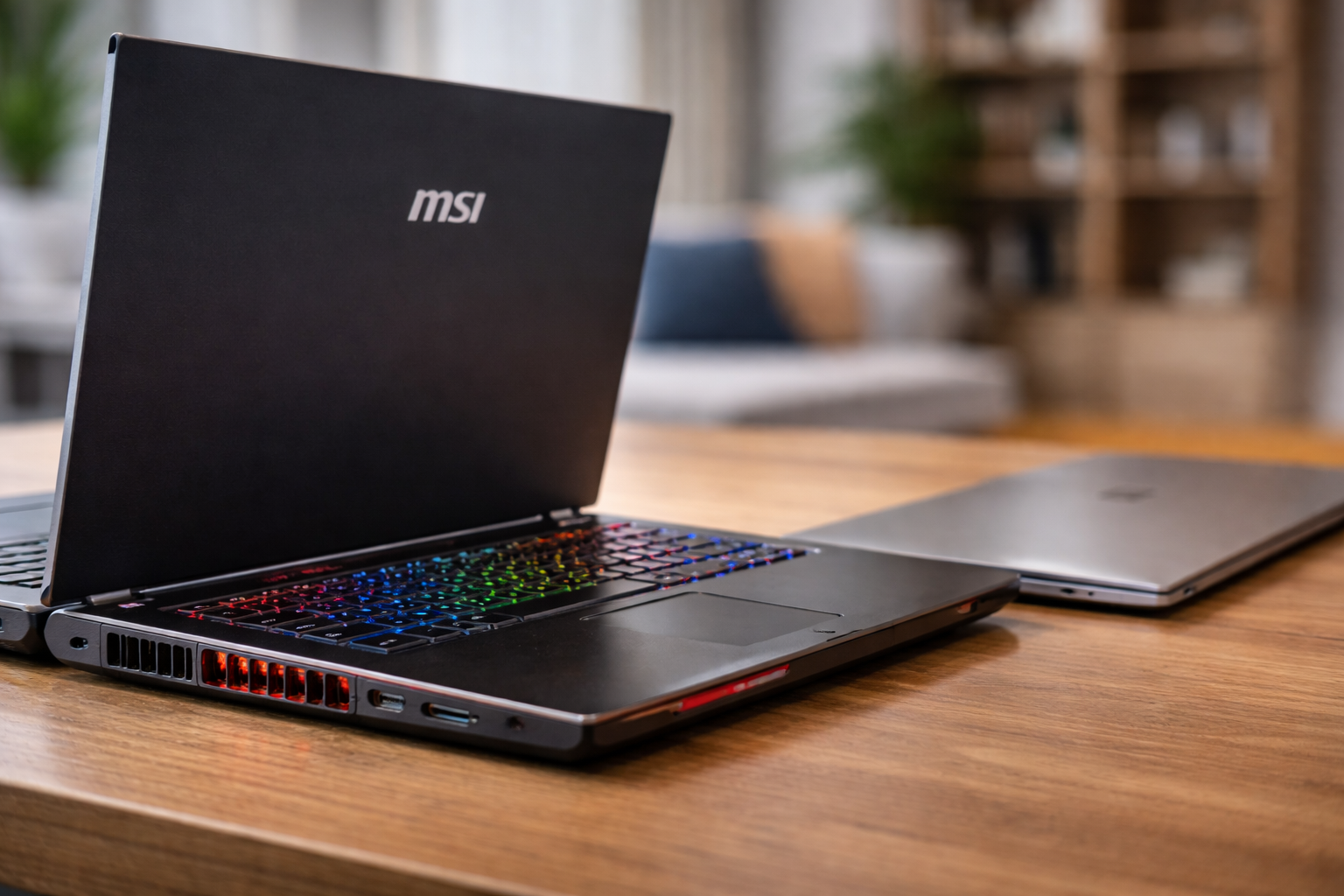
Short answer first: MSI gaming laptops are heavier than ultrabooks because they contain more powerful hardware, larger cooling systems, stronger chassis materials, and bigger batteries. These components are necessary to support high-performance gaming and demanding workloads. Ultrabooks, on the other hand, prioritize thin designs and portability over raw power.
Weight differences between gaming laptops and ultrabooks often surprise buyers. Many people expect modern laptops to be light and thin. However, gaming laptops serve a completely different purpose. They are designed to deliver desktop-like performance in a portable device, and that performance requires additional components.
Understanding why MSI gaming laptops weigh more can help you decide whether the extra power is worth the additional weight.
Introduction
Powerful laptops demand stronger hardware and larger cooling systems.
The Key Difference Between Gaming Laptops and Ultrabooks
To understand the weight difference, you must first understand the design goals behind each category.
Ultrabooks are designed to be:
- Thin
- Lightweight
- Energy-efficient
- Easy to carry daily
Gaming laptops, including many MSI models, prioritize:
- High performance
- Dedicated graphics cards
- Advanced cooling systems
- Large batteries
Because of these priorities, gaming laptops require more internal hardware. That additional hardware increases overall weight.
Dedicated Graphics Cards Add Significant Weight
One of the biggest reasons MSI gaming laptops weigh more is the presence of dedicated GPUs.
Gaming laptops typically include graphics cards from manufacturers like NVIDIA or AMD. These GPUs are significantly larger and more complex than integrated graphics found in ultrabooks.
Dedicated GPUs require:
- Extra circuitry
- Additional memory
- Larger cooling solutions
All of these elements increase the weight of the laptop.
Ultrabooks usually rely on integrated graphics built into the CPU. These integrated solutions are smaller and generate less heat, which allows ultrabooks to remain thinner and lighter.
Advanced Cooling Systems Require More Space
Cooling systems are another major factor contributing to the weight of MSI gaming laptops.
High-performance processors and graphics cards generate a large amount of heat. To prevent overheating, gaming laptops require sophisticated cooling solutions.
These cooling systems often include:
- Multiple heat pipes
- Large cooling fans
- Additional airflow vents
- Expanded thermal chambers
Each of these components adds mass to the laptop.
Ultrabooks rarely need such advanced cooling systems because their processors operate at lower power levels.
Larger Batteries Increase Overall Weight
Gaming laptops consume more energy than ultrabooks. As a result, they require larger batteries to provide acceptable battery life.
Large batteries allow gaming laptops to support:
- Power-hungry GPUs
- High refresh rate displays
- Intensive processing tasks
These batteries can weigh significantly more than the smaller batteries used in ultrabooks.
While ultrabooks focus on energy efficiency, gaming laptops focus on performance. Larger batteries are necessary to sustain that performance.
Stronger Chassis Materials Improve Durability
MSI gaming laptops often use reinforced chassis designs to support powerful hardware and cooling systems.
These materials may include:
- Aluminum alloy panels
- Reinforced frames
- Larger hinges
The additional structural support protects internal components from stress caused by heat and heavy usage.
Ultrabooks typically use thinner materials to reduce weight. However, thinner designs may sacrifice some structural strength.
Gaming laptops require sturdier construction to maintain durability under intense workloads.
Larger Displays Contribute to Extra Weight
Many MSI gaming laptops feature larger displays than typical ultrabooks.
Common gaming laptop display sizes include:
- 15.6 inches
- 16 inches
- 17.3 inches
These larger screens improve gaming experiences by providing greater visual immersion.
However, larger displays also increase the overall weight of the laptop.
Ultrabooks often use smaller displays, usually between 13 and 14 inches, which helps keep them lightweight.
High Refresh Rate Screens Require Additional Components
Gaming laptops often feature high refresh rate displays such as:
- 120 Hz
- 144 Hz
- 240 Hz
These displays provide smoother motion during gameplay.
However, high refresh rate screens require additional hardware support. This can include stronger display panels and enhanced internal circuitry.
These upgrades slightly increase weight but dramatically improve visual performance for gamers.
More Ports and Connectivity Options
MSI gaming laptops often include a wider range of ports than ultrabooks.
These ports may include:
- HDMI ports
- Ethernet ports
- Multiple USB ports
- Audio jacks
Gamers and creators benefit from these connectivity options.
However, each additional port requires extra internal hardware and structural support, which contributes to the laptop’s overall weight.
Ultrabooks often remove many ports to keep devices thinner and lighter.
Gaming Keyboards and Extra Features
Gaming laptops frequently include enhanced keyboards with additional features such as:
- RGB lighting
- Mechanical-style switches
- Larger key spacing
These keyboards are designed for long gaming sessions and precise control.
Although the weight difference from keyboards is smaller compared to GPUs or batteries, every component adds to the overall mass of the device.
Storage and Expandability Options
Many MSI gaming laptops allow upgrades for storage and memory.
This flexibility often requires additional internal slots and structural reinforcement.
Expandable components include:
- Extra SSD slots
- RAM upgrade slots
These upgrade options are valuable for gamers and professionals who need long-term flexibility.
However, they can slightly increase internal complexity and weight.
Ultrabooks often sacrifice upgradeability to maintain slim designs.
Gaming Performance Comes With Trade-Offs
The weight of MSI gaming laptops reflects their design priorities.
Performance-focused devices require:
- More hardware
- Stronger cooling
- Larger power supplies
These features improve performance but increase physical size and weight.
Ultrabooks focus on portability rather than performance.
Choosing between the two depends on your personal needs and priorities.
When the Extra Weight Is Worth It
For many users, the additional weight of gaming laptops is justified.
Users who benefit most from MSI gaming laptops include:
- Gamers
- Video editors
- 3D designers
- Software developers
These professionals require powerful hardware to run demanding applications.
For them, performance matters more than portability.
When Ultrabooks May Be the Better Choice
Ultrabooks may be better for users who prioritize portability and battery life.
They are ideal for:
- Business travelers
- Students carrying laptops daily
- Office professionals
Ultrabooks provide enough performance for everyday tasks without the extra weight.
Choosing the right device depends on your daily workload and mobility needs.
Gaming Laptops Are Becoming Lighter
Modern gaming laptops are gradually becoming thinner and lighter.
Manufacturers continue to improve cooling technology and component efficiency.
Some newer MSI gaming laptops already weigh less than older models while maintaining high performance.
However, gaming laptops will likely remain heavier than ultrabooks due to fundamental hardware differences.
Understanding Laptop Categories Helps Buyers
Many buyers compare gaming laptops to ultrabooks without realizing they serve different purposes.
Gaming laptops are portable performance machines.
Ultrabooks are lightweight productivity tools.
Both categories have strengths and weaknesses.
Choosing the right device requires understanding how you plan to use your laptop.
Students and Gaming Laptops
Some students consider MSI gaming laptops because they provide strong performance for both gaming and academic work.
However, weight can become a factor for students carrying laptops across campus daily.
Students evaluating this balance may want to explore Are MSI laptops good for college students on a budget? to understand whether performance laptops fit their academic needs.
Understanding weight, price, and performance together can help students make better decisions.
Final Thoughts
MSI gaming laptops are heavier than ultrabooks because they prioritize performance over portability.
Powerful graphics cards, advanced cooling systems, larger batteries, and reinforced chassis designs all contribute to additional weight.
While ultrabooks focus on thin designs and energy efficiency, gaming laptops focus on delivering high performance for demanding tasks.
Ultimately, the best laptop depends on your needs. If you require powerful hardware for gaming, design, or development, the extra weight of an MSI gaming laptop may be a worthwhile trade-off.